
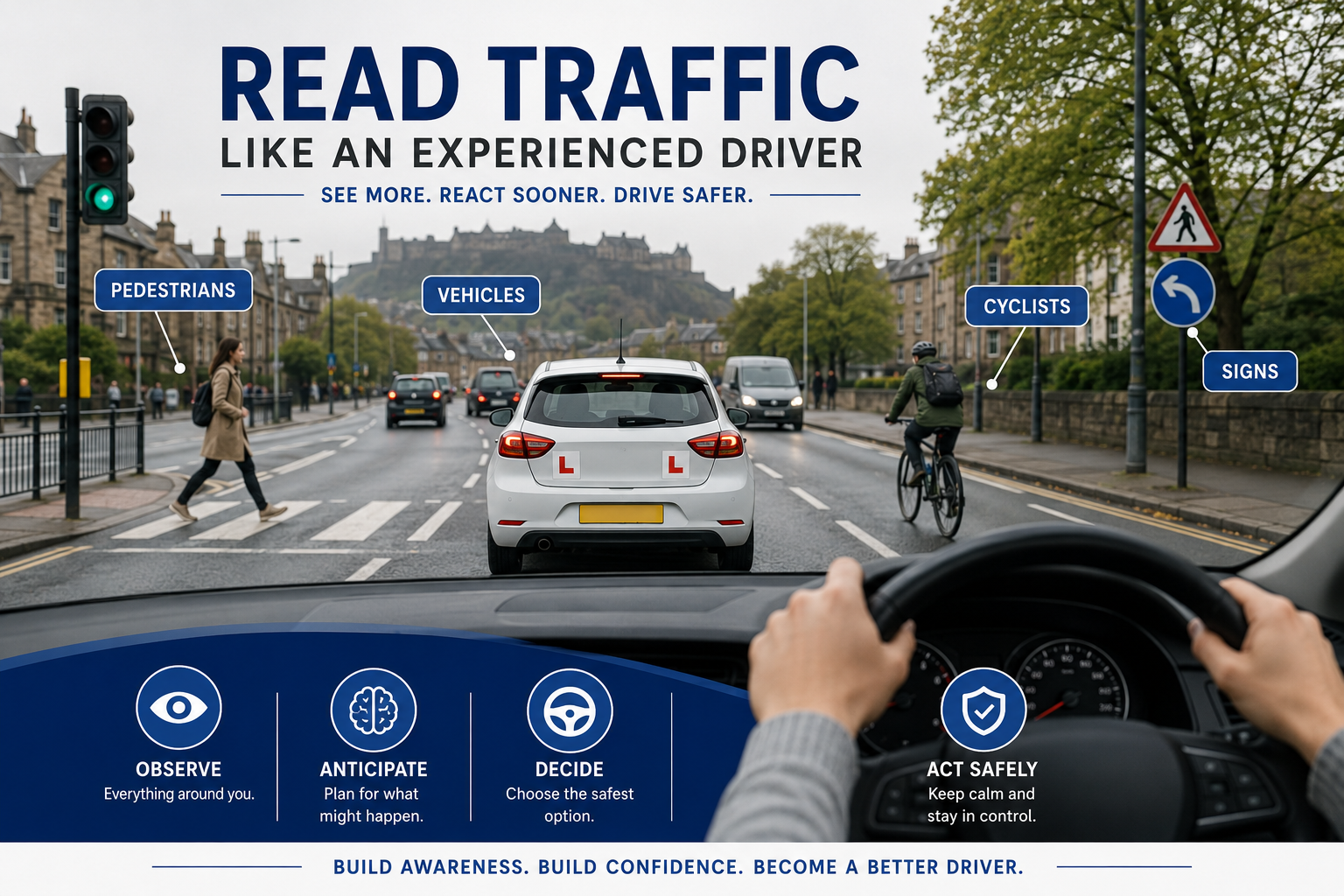
How to Read Traffic Like an Experienced Driver | STUART’S Driving School
Learn how to read traffic like an experienced driver. Discover practical tips from STUART’S Driving School to improve awareness, decision-making, and confidence on roads across Central Scotland.
How to Read Traffic Like an Experienced Driver
Learning to drive is about much more than controlling the steering wheel, changing gears, or passing your practical driving test. One of the most valuable skills every learner driver can develop is the ability to read traffic. Experienced drivers don’t simply react to what’s happening in front of them—they observe, anticipate, and plan ahead.
Reading traffic means understanding how vehicles, cyclists, pedestrians, road signs, and road conditions interact. By recognising developing situations early, you can make safer decisions, reduce stress, and enjoy a smoother driving experience.
At STUART’S Driving School, our DVSA-approved instructors teach learners how to read traffic from their very first lesson. Through structured driving lessons across Edinburgh, Livingston, Falkirk, Stirling, Fife, West Lothian, and throughout Central Scotland, we help learners build the awareness and confidence needed for safe, independent driving.
What Does It Mean to Read Traffic?
Reading traffic is the ability to observe your surroundings, understand what other road users may do next, and adjust your driving before a situation becomes challenging.
Instead of focusing only on the vehicle directly ahead, experienced drivers constantly monitor the wider road environment.
This includes observing:
- Traffic flow
- Road signs and markings
- Pedestrians
- Cyclists and motorcyclists
- Junctions and roundabouts
- Parked vehicles
- Traffic lights
- Changing weather conditions
- Vehicles joining or leaving the road
The more information you gather, the more time you have to make calm and safe decisions.
Why Reading Traffic Is an Essential Driving Skill
Many driving situations can be predicted before they become hazards. Experienced drivers notice small clues that help them prepare for what may happen next.
For example, a vehicle slowing near a junction may be preparing to turn. A pedestrian standing close to a crossing may be about to step into the road. A cyclist looking over their shoulder may intend to move into your lane.
Recognising these signs early allows you to reduce speed, create more space, and respond safely without sudden braking or steering.
Look Further Ahead, Not Just in Front
One of the biggest differences between experienced and inexperienced drivers is where they focus their attention.
Instead of looking only at the car immediately ahead, experienced drivers scan further along the road.
This helps them identify:
- Slow-moving traffic
- Changing speed limits
- Roadworks
- Traffic queues
- Pedestrian crossings
- Sharp bends
- Roundabouts
- Potential hazards
Looking further ahead gives you extra time to plan your actions, making your driving smoother and safer.
Observe Other Road Users
Safe driving is about understanding the behaviour of everyone sharing the road.
Pay close attention to:
- Pedestrians waiting near crossings
- Cyclists changing road position
- Motorcyclists filtering through traffic
- Drivers signalling late
- Buses pulling away from stops
- Large vehicles with limited visibility
By recognising what others may do next, you can adjust your driving early and avoid unnecessary risks.
Use Your Mirrors Effectively
Reading traffic isn’t only about looking ahead. Regular mirror checks help you stay aware of vehicles behind and beside you.
Good mirror use helps you:
- Change lanes safely
- Prepare for junctions
- Monitor overtaking vehicles
- Maintain safe road positioning
- React to changing traffic conditions
Checking your mirrors frequently should become a natural part of every journey.
Anticipate Instead of React
Experienced drivers don’t wait for problems to happen—they expect them.
For example, if you see children playing near the pavement, it’s sensible to reduce your speed in case someone suddenly runs into the road. If heavy rain begins, increasing your following distance allows more time to stop safely.
Anticipating possible hazards helps you stay in control and reduces the need for sudden actions.
Common Mistakes Learner Drivers Make
Every learner develops at their own pace, but some common habits can make reading traffic more difficult.
- Looking only at the vehicle directly ahead
- Missing important road signs
- Forgetting regular mirror checks
- Reacting too late to traffic changes
- Rushing towards junctions
- Focusing only on vehicle control
These habits improve through structured lessons, regular practice, and constructive feedback from your instructor.
How STUART’S Driving School Helps You Read Traffic with Confidence
At STUART’S Driving School, every lesson is designed to help learners develop safe driving habits for life.
Our experienced DVSA-approved instructors teach learners how to:
- Scan further ahead
- Recognise developing hazards
- Read traffic flow confidently
- Improve observation skills
- Plan ahead in busy traffic
- Make safe, informed decisions
- Drive calmly in different road conditions
These practical skills prepare learners not only for the practical driving test but also for everyday driving across Central Scotland.
Read the Road, Drive with Confidence
Reading traffic is one of the most valuable skills you’ll develop as a driver. By improving your observation, planning ahead, and understanding how other road users behave, you’ll become a safer and more confident driver.
At STUART’S Driving School, we help learners build these skills through structured, personalised driving lessons that follow the DVSA’s Safe Driving for Life approach.
Whether you’re learning to drive for the first time or preparing for your practical driving test, our experienced instructors are here to help you become a safe, responsible, and independent driver across Edinburgh, Livingston, Falkirk, Stirling, Fife, West Lothian, and throughout Central Scotland.