
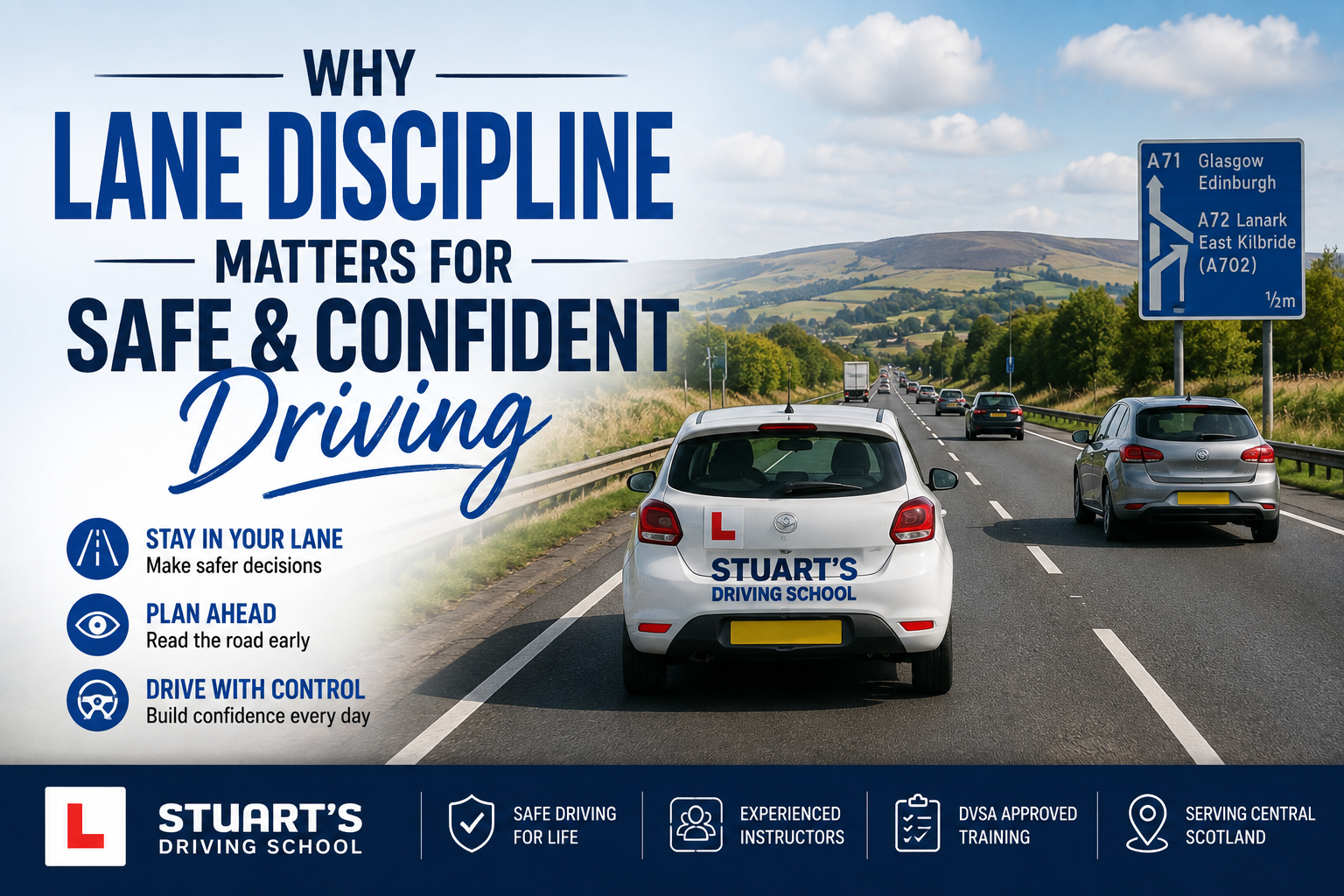
Why Lane Discipline Matters for Safe Driving | STUART’S
Learn why lane discipline matters for safe driving and how correct lane choice, positioning and lane changes can improve confidence with STUART’S Driving School.
Why Lane Discipline Matters When You Drive
Learning to drive safely involves more than controlling the car. You also need to understand where your vehicle should be positioned, when you should change lanes, and how your decisions affect other road users.
Lane discipline is an important part of confident driving because it helps keep traffic organised and gives other road users a clearer understanding of what you intend to do. Good lane positioning can also make junctions, roundabouts and multi-lane roads easier to manage.
At STUART’S Driving School, we focus on helping learners develop safe driving habits while maintaining proper control of the vehicle. Our lessons help learners build practical skills and confidence for the driving test and everyday journeys across Central Scotland.
What Is Lane Discipline?
Lane discipline means using the appropriate lane for your direction of travel and following the road signs, markings and traffic conditions around you.
It also involves maintaining a suitable position within your lane and changing lanes safely when necessary.
Good lane discipline includes:
- Choosing the correct lane early
- Following road signs and lane markings
- Maintaining a suitable road position
- Checking mirrors before changing lanes
- Signalling when appropriate
- Moving across only when it is safe
- Returning to the appropriate lane after overtaking
These habits help make your driving more predictable and reduce unnecessary confusion for other road users.
Why Correct Lane Positioning Matters
Your position on the road can affect how safely you approach bends, junctions, roundabouts and other vehicles.
Being in the appropriate lane gives you a clearer route and allows other drivers to understand your intentions. Poor positioning, on the other hand, can result in last-minute lane changes, missed turns or unnecessary pressure in busy traffic.
Developing good positioning habits during driving lessons makes it easier to handle more complicated road layouts as your experience grows.
Follow Road Signs and Lane Markings
Road signs and markings provide important information about how lanes should be used. Learners should develop the habit of looking ahead and identifying these instructions before reaching a decision point.
Signs and markings may indicate:
- Which lane to use for a particular direction
- Upcoming junctions or exits
- Turn restrictions
- Lane closures
- Bus or cycle lanes
- Changes in road layout
- Approaching roundabouts
Reading this information early gives you more time to choose your lane without rushing.
Changing Lanes Safely
Changing lanes should never be treated as a quick steering movement. Before moving across, you need to establish whether the space you want to enter is clear and whether your manoeuvre could affect another road user.
The Highway Code advises drivers to use their mirrors and, where necessary, take a quick sideways glance to check that a lane change will not force another road user to change speed or direction. When it is safe, signal your intention and move across smoothly.
A useful routine is:
- Check your mirrors
- Assess the space around your vehicle
- Check the relevant blind spot when necessary
- Signal if appropriate
- Move across when it is safe
- Cancel the signal once the manoeuvre is complete
Good preparation is far safer than making a sudden lane change at the last moment.
Lane Discipline on Dual Carriageways
Dual carriageways can feel challenging for learner drivers because traffic is moving at higher speeds and there may be several lanes to manage.
On a two-lane dual carriageway, the Highway Code advises drivers to remain in the left-hand lane unless overtaking or turning right. After overtaking, drivers should return to the left lane when it is safe to do so.
This means learners should avoid staying in an overtaking lane unnecessarily. Good lane discipline keeps traffic flowing and reduces the need for other drivers to make unnecessary adjustments.
Lane Choice at Roundabouts
Roundabouts require careful observation and early planning. Your correct lane will depend on the road signs, markings, number of exits and direction you intend to take.
Before entering a roundabout, learners should:
- Read the signs and road markings
- Choose the appropriate lane
- Check mirrors and surrounding traffic
- Signal when required
- Maintain a suitable speed
- Follow the correct lane through the roundabout
- Prepare for the exit before reaching it
Getting into position early can make the manoeuvre much easier and reduce the temptation to change lanes suddenly while already on the roundabout.
Why Unnecessary Lane Changes Can Cause Problems
Changing lanes simply because another lane appears to be moving slightly faster can create unnecessary risk.
Frequent lane changes may mean you spend more time checking mirrors, judging gaps and adjusting your position. In busy traffic, this can also make your intentions less predictable to other road users.
Following the road layout and remaining in an appropriate lane can often make your journey smoother and more controlled.
Common Lane Discipline Mistakes Learner Drivers Make
Lane positioning can take time to master. Some common difficulties include:
- Choosing the correct lane too late
- Ignoring lane arrows or road markings
- Changing lanes without sufficient observation
- Forgetting to check the blind spot when necessary
- Staying in the right-hand lane unnecessarily
- Making sudden lane changes near junctions
- Focusing on the vehicle ahead instead of the wider road layout
These mistakes can usually be improved through structured practice, clear feedback and experience on different types of roads.
How STUART’S Driving School Helps You Build Better Lane Discipline
Lane discipline develops through practical experience rather than simply memorising rules.
At STUART’S Driving School, learners can develop their road skills by practising different driving situations while receiving guidance from an experienced instructor.
Lessons can help you improve your ability to:
- Read road signs and markings
- Choose lanes with greater confidence
- Maintain a suitable road position
- Plan lane changes earlier
- Use mirrors effectively
- Approach multi-lane roads calmly
- Make safer decisions around other road users
This practical approach supports STUART’S focus on learning to drive safely while maintaining full control of the vehicle and developing the skills needed to anticipate hazards.
Lane Discipline and the Practical Driving Test
Safe road positioning and responsible lane changes are important parts of demonstrating competent driving during the practical test.
The DVSA national standard expects drivers to maintain a suitable position on the road, change lanes safely and responsibly, and overtake legally and safely.
During your lessons, developing these skills helps you demonstrate that you can manage the road without relying on constant instructor direction.
Good Lane Discipline Builds Confidence
Many learner drivers feel nervous when they approach roads with multiple lanes. This often happens because they are trying to make too many decisions at once.
Planning your lane position early can reduce that pressure.
When you understand where you need to be and why, you can concentrate more effectively on observation, speed control and other road users.
Good lane discipline can therefore help you:
- Feel more prepared on unfamiliar roads
- Reduce last-minute decisions
- Improve your road awareness
- Make smoother manoeuvres
- Communicate your intentions more clearly
- Drive with greater confidence
Lane Discipline Is a Skill for Life
Lane discipline does not stop being important once you pass your driving test. As an independent driver, you will regularly encounter dual carriageways, busy junctions, multi-lane roundabouts and changing road layouts.
The habits developed during professional driving lessons can help you handle these situations more confidently and responsibly.
Good drivers do not simply think about where they are going. They consider which lane they need, what other road users are doing and what the road is asking them to do next.
Build Your Driving Skills with STUART’S Driving School
Good lane discipline is about more than staying between the lines. It is about reading the road, choosing the appropriate position, communicating clearly and making safe decisions.
At STUART’S Driving School, our lessons are designed to help learners develop practical driving skills, confidence and control. Whether you are preparing for your first driving lesson, working towards your practical test or looking to improve your driving skills, structured tuition can help you become a safer and more independent driver.
With lessons available across Central Scotland, STUART’S Driving School can help you develop the skills needed to approach different roads and traffic situations with greater confidence.