
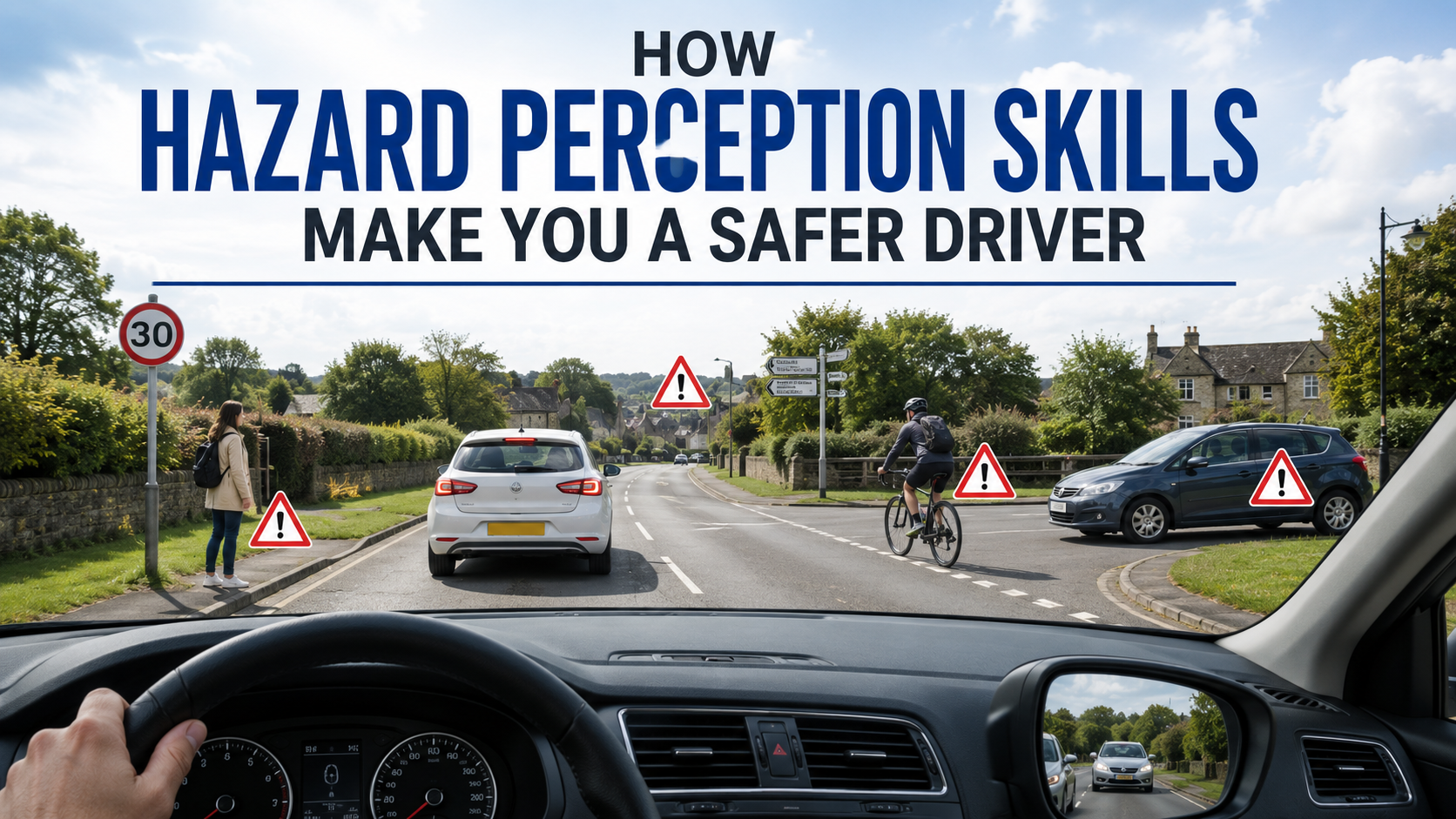
Learn how hazard perception improves driving confidence, decision-making, and road safety. Discover how STUART’S Driving School helps learners develop essential hazard awareness across Central Scotland.
How Hazard Perception Skills Make You a Safer Driver
Learning to drive involves much more than steering, changing gears, or passing the practical driving test. Becoming a safe driver means recognising potential dangers early, making informed decisions, and responding calmly in changing road conditions.
Hazard perception is one of the most valuable driving skills you can develop. It allows you to identify risks before they become dangerous, giving you more time to react safely and confidently.
At STUART’S Driving School, hazard perception is incorporated into every lesson. Our DVSA-approved instructors help learners improve observation, forward planning, and decision-making so they are fully prepared for independent driving across Central Scotland.
What Is Hazard Perception?
Hazard perception is the ability to recognise situations that may require you to slow down, change direction, or stop safely before they become immediate dangers.
A hazard often starts as a developing situation rather than an obvious emergency. Recognising it early gives you valuable time to respond safely.
Examples include:
- A pedestrian waiting to cross the road.
- A cyclist moving around parked vehicles.
- A vehicle braking unexpectedly ahead.
- Children playing close to the road.
- Cars emerging from side streets.
- Poor weather reducing visibility.
- Sharp bends or concealed junctions.
Drivers who recognise hazards early make smoother, safer decisions without sudden braking or harsh steering.
Why the DVSA Places So Much Importance on Hazard Perception
The Driver and Vehicle Standards Agency (DVSA) includes hazard perception in the Theory Test because recognising risk is one of the foundations of safe driving.
However, identifying hazards on a computer screen is only the beginning. During practical lessons, learners apply those same skills in real traffic by:
- Looking well ahead.
- Checking mirrors regularly.
- Reading road signs and road markings.
- Anticipating the actions of other road users.
- Adjusting speed appropriately.
- Maintaining safe road positioning.
At STUART’S Driving School, learners are encouraged to think ahead rather than simply react to situations as they occur.
Common Hazards Every Learner Driver Should Recognise
Pedestrians
Pedestrians may step into the road unexpectedly, especially near schools, shopping areas, bus stops, and parked vehicles.
Cyclists and Motorcyclists
These road users are smaller and can be harder to spot. Learners are taught to leave plenty of space and complete effective mirror checks before changing direction.
Parked Vehicles
Parked cars can hide pedestrians, cyclists, or vehicles pulling away unexpectedly, making careful observation essential.
Junctions and Roundabouts
Good observation and correct judgement at junctions remain among the most important skills for safe driving and successful practical tests.
Rural Roads
Country roads throughout Central Scotland often feature sharp bends, narrow lanes, farm traffic, and changing speed limits that require careful planning.
Weather Conditions
Rain, fog, snow, and bright winter sunlight all reduce visibility and increase stopping distances. Learning how to adjust your driving in different weather conditions is an important part of becoming a responsible driver.
How STUART’S Driving School Develops Hazard Awareness
Hazard perception develops gradually through structured practice and professional coaching.
During lessons, our instructors encourage learners to:
- Look further ahead.
- Scan mirrors frequently.
- Identify developing hazards early.
- Maintain safe following distances.
- Plan ahead for changing traffic conditions.
- Stay calm under pressure.
This structured approach helps learners become confident, independent drivers rather than simply preparing them for the driving test.
Why Observation Makes You a Better Driver
Strong observation skills lead to better decisions and smoother driving.
Experienced drivers continuously monitor:
- Road signs.
- Speed limits.
- Traffic flow.
- Pedestrians.
- Cyclists.
- Road markings.
- Vehicles approaching from side roads.
- Changing weather conditions.
Developing these habits helps learners stay aware of what is happening around them and respond safely to changing situations.
Building Confidence Through Real Driving Experience
Hazard perception improves through regular practice in a variety of driving environments.
At STUART’S Driving School, learners gain experience on:
- Edinburgh city streets.
- Residential roads.
- Busy town centres.
- Rural country roads.
- Dual carriageways.
- Spiral roundabouts.
- Higher-speed routes.
Driving in different environments helps learners build confidence and prepares them for the variety of situations they will experience after passing their test.
How Hazard Perception Supports Independent Driving
Passing your driving test marks the beginning of independent driving—not the end of learning.
Strong hazard perception skills help drivers:
- Recognise risks earlier.
- Make better driving decisions.
- Remain calm under pressure.
- Drive safely in unfamiliar areas.
- Adapt to changing weather conditions.
- Protect themselves and other road users.
These lifelong skills contribute to safer, more confident driving every day.
Learn Safe Driving Skills with STUART’S Driving School
At STUART’S Driving School, we help learners develop the knowledge, confidence, and practical skills needed for safe, independent driving.
Our experienced DVSA-approved instructors provide structured lessons that improve hazard perception, observation, and decision-making while preparing learners for real-world driving across Edinburgh, Livingston, Falkirk, Stirling, Fife, West Lothian, and throughout Central Scotland.
Whether you’re just starting your driving journey or preparing for your practical driving test, we’re here to help you become a confident and responsible driver for life.