
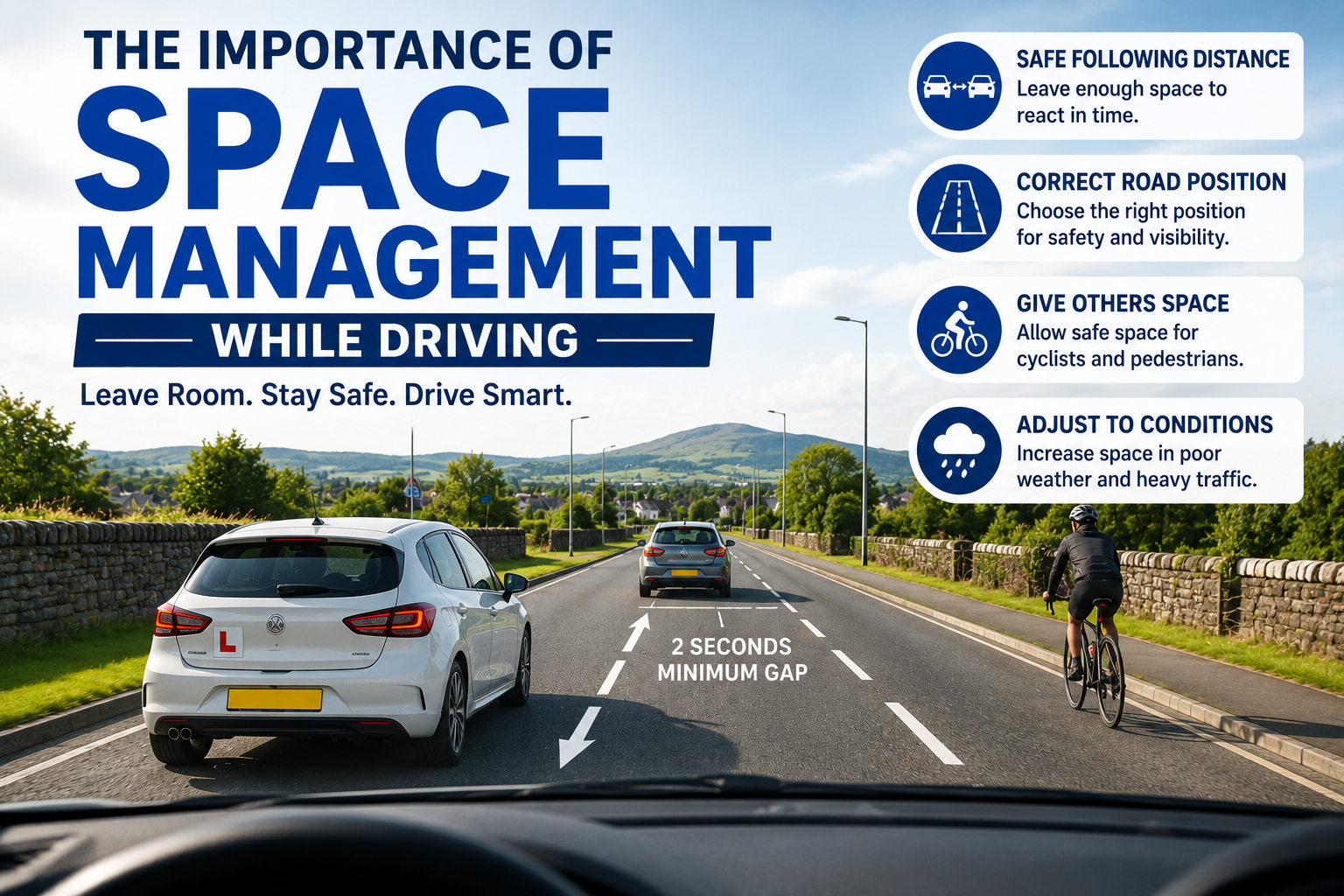
The Importance of Space Management While Driving | STUART’S Driving School
Learn why space management is essential for safe driving. Discover how STUART’S Driving School helps learner drivers maintain safe distances, reduce risks, and build confidence across Central Scotland.
Why Space Management Is a Key Skill for Every Driver
Learning to drive is about much more than steering, changing gears, or passing the practical driving test. One of the most important skills every learner driver must develop is understanding how to manage the space around their vehicle.
Space management means maintaining safe distances from other road users, choosing the correct road position, and giving yourself enough time to react to changing traffic conditions. Good space management reduces stress, improves decision-making, and helps prevent collisions.
At STUART’S Driving School, our DVSA-approved instructors teach learners how to create and maintain safe space in every driving situation. Through structured driving lessons across Edinburgh, Livingston, Falkirk, Stirling, Fife, West Lothian, and throughout Central Scotland, learners develop the confidence needed to drive safely and independently.
What Is Space Management?
Space management is the ability to maintain a safe amount of space around your vehicle while driving.
Rather than focusing only on the vehicle directly ahead, skilled drivers stay aware of everything around them. They leave enough room to react safely if traffic conditions change unexpectedly.
Good space management includes:
- Maintaining a safe following distance.
- Leaving enough space when overtaking.
- Giving cyclists and pedestrians plenty of room.
- Positioning the vehicle correctly within the lane.
- Allowing extra stopping distance in poor weather.
- Avoiding unnecessary close driving.
Managing space effectively gives drivers more time to observe, think ahead, and respond safely.
Why the DVSA Emphasises Space Management
The Driver and Vehicle Standards Agency (DVSA) encourages learner drivers to develop safe driving habits that continue long after they pass the practical driving test.
Space management plays an important role because it helps drivers:
- Anticipate developing hazards.
- Reduce the need for harsh braking.
- Make smoother driving decisions.
- Improve observation and forward planning.
- Protect vulnerable road users.
- Drive with greater confidence in busy traffic.
At STUART’S Driving School, learners practise these techniques from their first lesson, building confidence through structured, real-world driving experience.
Maintain a Safe Following Distance
Following the vehicle ahead too closely is one of the most common mistakes made by learner drivers. Keeping a safe following distance gives you valuable time to react if traffic slows suddenly or comes to a stop.
In normal driving conditions, the two-second rule provides a useful guide. During rain, fog, snow, or icy conditions, this gap should be increased to allow for longer stopping distances.
Maintaining a safe following distance improves safety, reduces stress, and lowers the risk of rear-end collisions.
Create Space Around Your Vehicle
Safe driving involves managing the space on every side of your vehicle, not just the area in front.
Good drivers create space by:
- Leaving extra room beside parked vehicles.
- Giving cyclists and motorcyclists adequate clearance.
- Avoiding another driver’s blind spot.
- Keeping a safe distance from larger vehicles.
- Allowing enough room at junctions and roundabouts.
Creating space provides more options if road conditions change unexpectedly and helps you remain calm under pressure.
Managing Space in Different Driving Environments
Residential Roads
Expect parked cars, pedestrians, children, and vehicles pulling out without warning. Reducing speed and leaving extra space improves safety.
Dual Carriageways
Higher speeds require greater following distances, careful lane discipline, and well-planned lane changes.
Rural Roads
Country roads across Central Scotland often feature narrow lanes, sharp bends, agricultural vehicles, and limited visibility. Leaving extra space is essential.
Busy Town Centres
Heavy traffic, buses, cyclists, pedestrians, and frequent junctions require constant observation and careful road positioning.
Common Space Management Mistakes
Most learner drivers experience similar challenges while developing their driving skills.
- Following vehicles too closely.
- Driving too near parked cars.
- Misjudging overtaking distance.
- Entering junctions without enough space.
- Remaining in another driver’s blind spot.
- Forgetting to increase following distance in poor weather.
These habits improve through regular practice, constructive feedback, and professional instruction.
How STUART’S Driving School Helps You Develop Space Management Skills
At STUART’S Driving School, space management is introduced gradually through structured lessons that build confidence step by step.
Our instructors encourage learners to:
- Plan further ahead.
- Maintain safe following distances.
- Select the correct road position.
- Recognise hazards early.
- Adjust speed to changing traffic conditions.
- Give vulnerable road users sufficient space.
This coaching approach reflects DVSA teaching methods and helps learners become safe, confident, and independent drivers.
Why Good Space Management Builds Confidence
Many learner drivers feel anxious because traffic situations develop quickly. Creating more space around your vehicle gives you additional time to observe, think clearly, and react safely.
Good space management helps you:
- Feel less pressured in busy traffic.
- Make smoother driving decisions.
- Improve hazard awareness.
- Reduce unnecessary braking.
- Drive more comfortably.
- Build confidence on every journey.
Confidence comes from preparation and awareness—not from driving faster.
Preparing for the Practical Driving Test
During your practical driving test, the examiner will assess how safely you manage the space around your vehicle throughout the journey.
You will be expected to:
- Maintain appropriate following distances.
- Position the vehicle correctly.
- Give adequate clearance to cyclists and parked vehicles.
- Adjust your speed to road and traffic conditions.
- Respond safely to developing hazards.
Demonstrating effective space management shows that you can drive safely and responsibly without supervision.
Safe Driving Starts with Good Space Management
Passing the practical driving test is only the beginning of your driving journey. Developing strong space management skills prepares you for everyday driving by helping you stay aware, make informed decisions, and respond calmly in changing situations.
At STUART’S Driving School, we focus on developing lifelong driving habits—not simply preparing learners to pass a test. Our experienced DVSA-approved instructors provide structured driving lessons that help learners become safe, confident, and responsible drivers across Edinburgh, Livingston, Falkirk, Stirling, Fife, West Lothian, and throughout Central Scotland.
Whether you’re taking your first driving lesson or preparing for your practical driving test, we’re here to help you build the skills needed for safe, independent driving every day.