
The Importance of Staying Calm in Unexpected Road Situations | STUART’S Driving School
Learn why staying calm in unexpected road situations helps you make safer driving decisions. Discover how STUART’S Driving School prepares learner drivers for real-world driving across Central Scotland.
The Importance of Staying Calm in Unexpected Road Situations
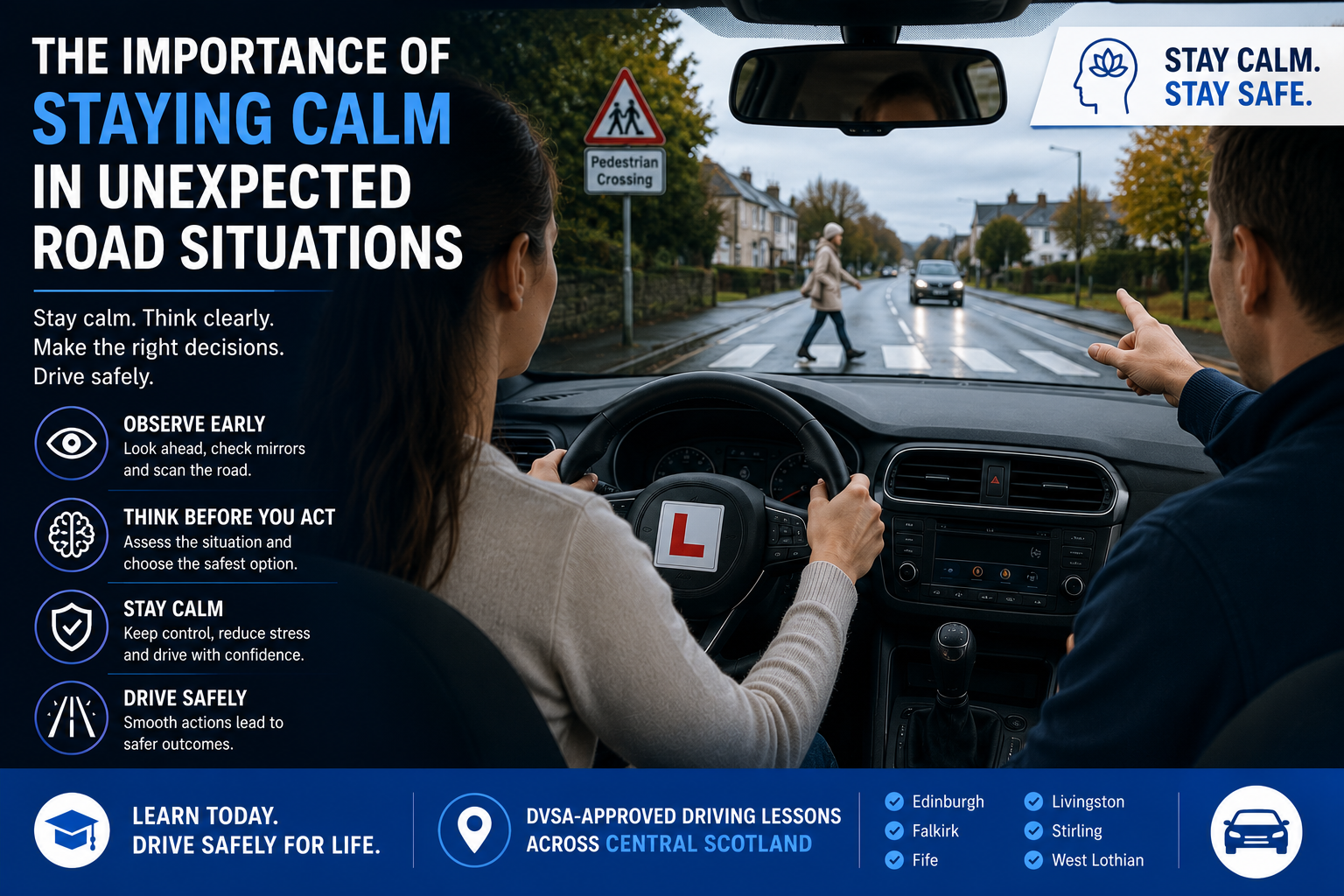
Every drive is different. Even on familiar roads, unexpected situations can arise without warning. A pedestrian may step into the road, traffic may stop suddenly, or poor weather may reduce visibility. While these situations can feel stressful for learner drivers, staying calm allows you to make better decisions and remain in control of your vehicle.
At STUART’S Driving School, we teach learners that confidence is built through preparation, observation, and calm decision-making. Our DVSA-approved instructors help learners develop the skills needed to deal with unexpected situations safely during driving lessons across Edinburgh, Livingston, Falkirk, Stirling, Fife, West Lothian, and throughout Central Scotland.
Why Staying Calm Matters
When drivers panic, they are more likely to make rushed decisions such as harsh braking, incorrect steering, or missing important observations. Remaining calm gives you the time to assess the situation, consider your options, and respond safely.
Calm drivers are better able to:
- Think clearly under pressure.
- Observe hazards more effectively.
- Make smoother driving decisions.
- Maintain better vehicle control.
- Protect themselves and other road users.
Unexpected Situations Every Learner May Face
No two journeys are exactly the same. During your driving lessons, you may encounter situations that require quick but controlled decisions.
Common examples include:
- Pedestrians crossing unexpectedly.
- Cyclists moving around parked vehicles.
- Vehicles emerging from side roads.
- Temporary roadworks.
- Emergency service vehicles.
- Heavy rain, fog, or icy roads.
- Slow-moving traffic.
- Animals crossing rural roads.
Learning how to respond calmly to these situations helps build confidence for everyday driving.
How Good Observation Reduces Stress
One of the best ways to stay calm is by observing the road well ahead. Drivers who scan the road early are less likely to be surprised by developing hazards.
Good observation includes:
- Checking mirrors regularly.
- Reading road signs early.
- Watching traffic further ahead.
- Monitoring pedestrians and cyclists.
- Recognising potential hazards before they develop.
The earlier you recognise a developing situation, the more time you have to react smoothly and safely.
Think Before You React
Unexpected situations often happen quickly, but that doesn’t mean your response should be rushed. Safe drivers assess the situation before taking action.
For example, if traffic suddenly slows ahead, a calm driver will:
- Check the mirrors.
- Ease off the accelerator.
- Brake smoothly if necessary.
- Maintain a safe following distance.
- Continue observing surrounding traffic.
This controlled approach reduces the risk of sudden manoeuvres and helps keep everyone safe.
Managing Nerves During Driving Lessons
Feeling nervous is completely normal when learning to drive. Confidence develops gradually through regular practice and professional instruction.
At STUART’S Driving School, instructors create a supportive learning environment where learners are encouraged to ask questions, learn from mistakes, and build confidence one lesson at a time.
Simple techniques that can help include:
- Looking further ahead instead of focusing only on the vehicle in front.
- Maintaining a safe following distance.
- Taking steady, controlled breaths.
- Listening carefully to instructor guidance.
- Remembering that every lesson is an opportunity to improve.
Building Confidence Through Experience
Confidence comes from experience, not from rushing your progress. As learners encounter different roads, weather conditions, and traffic situations, they naturally become more comfortable dealing with unexpected events.
During lessons with STUART’S Driving School, learners gain experience driving on:
- Busy city streets.
- Residential roads.
- Rural routes.
- Dual carriageways.
- Spiral roundabouts.
- Busy town centres.
- Higher-speed roads.
This variety helps learners become adaptable drivers who remain calm in different driving environments.
Why Calm Drivers Make Better Decisions
Drivers who remain calm are more likely to:
- Recognise hazards earlier.
- Choose safe road positions.
- Adjust speed appropriately.
- Communicate clearly with other road users.
- Avoid unnecessary risks.
- Drive more smoothly and confidently.
These are exactly the qualities that DVSA examiners look for during the practical driving test and that continue to benefit drivers long after they receive their licence.
Preparing for Independent Driving
Passing the practical driving test is only the beginning of your driving journey. Once you begin driving independently, you will face situations that cannot be predicted or memorised.
Developing the ability to stay calm, think clearly, and respond safely prepares you for everyday driving throughout Central Scotland and beyond.
Learn with Confidence at STUART’S Driving School
At STUART’S Driving School, we do more than prepare learners to pass the practical driving test. We help build the confidence, awareness, and decision-making skills needed for a lifetime of safe driving.
Our experienced DVSA-approved instructors provide structured driving lessons tailored to every learner, helping you remain calm, stay in control, and become a safe, independent driver across Edinburgh, Livingston, Falkirk, Stirling, Fife, West Lothian, and throughout Central Scotland.