
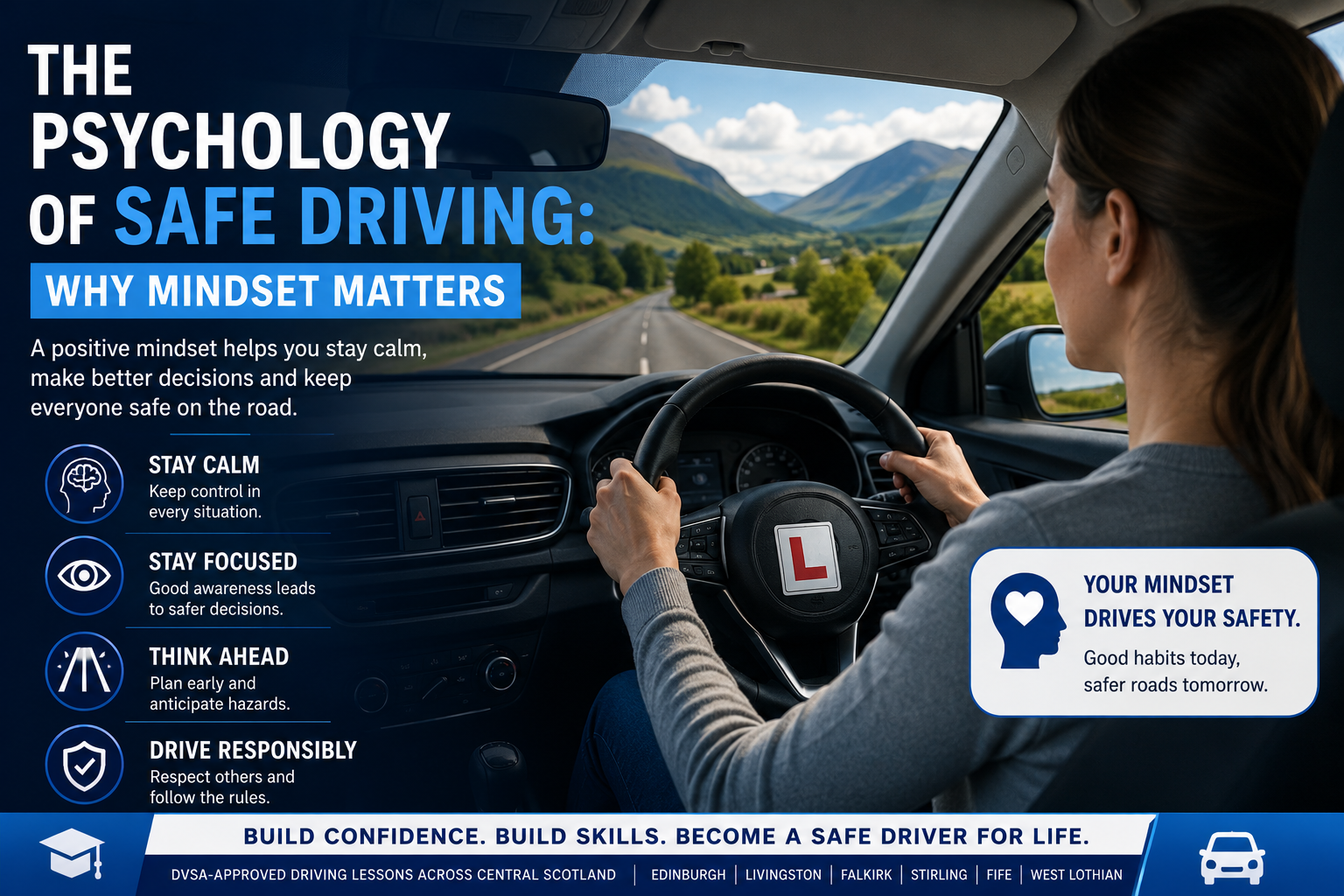
The Psychology of Safe Driving: Why Mindset Matters | STUART’S Driving School
Discover why the right driving mindset is essential for safe driving. Learn how STUART’S Driving School helps learner drivers build confidence, stay focused, and make safer decisions across Central Scotland.
The Psychology of Safe Driving: Why Mindset Matters
Learning to drive involves much more than mastering vehicle controls or passing the practical driving test. Safe driving also depends on your mindset—how you think, respond, and make decisions behind the wheel.
A calm, focused, and responsible attitude allows learner drivers to handle challenges with confidence, make better decisions, and reduce unnecessary risks. At STUART’S Driving School, we believe developing the right mindset is just as important as learning practical driving skills.
Through structured DVSA-approved driving lessons across Edinburgh, Livingston, Falkirk, Stirling, Fife, West Lothian, and throughout Central Scotland, we help learners become safe, confident, and independent drivers for life.
What Does Driving Mindset Mean?
Your driving mindset is your mental approach every time you get behind the wheel. It influences how you observe the road, respond to hazards, manage pressure, and make decisions.
A positive driving mindset includes:
- Remaining calm under pressure
- Staying focused on the road
- Thinking ahead
- Making safe decisions
- Accepting feedback and learning from mistakes
- Respecting other road users
Developing these habits helps learners build confidence while driving safely in different road and traffic conditions.
Why the Right Mindset Improves Driving
Driving is a continuous decision-making process. Every journey requires you to observe your surroundings, assess potential risks, and respond appropriately.
Drivers with the right mindset are more likely to:
- Notice hazards earlier
- Plan ahead effectively
- Maintain safe following distances
- Stay patient in heavy traffic
- React calmly to unexpected situations
- Make smoother, safer driving decisions
These qualities support safer driving long after passing the practical test.
Managing Nerves Behind the Wheel
Feeling nervous during driving lessons is completely normal. Many learner drivers worry about making mistakes, driving in busy traffic, or approaching unfamiliar junctions.
Rather than allowing nerves to affect performance, it’s important to stay calm, listen to your instructor, and focus on one situation at a time.
At STUART’S Driving School, our instructors create a supportive learning environment where learners can build confidence gradually without unnecessary pressure.
Confidence Comes from Preparation
True driving confidence isn’t about taking risks—it comes from understanding the road and being prepared for different situations.
Confidence develops through:
- Regular driving practice
- Structured driving lessons
- Constructive instructor feedback
- Learning from previous lessons
- Developing strong observation skills
- Building experience on different road types
As experience grows, learners become more comfortable making safe and independent driving decisions.
Why Patience Is a Safe Driving Skill
Patience is one of the most valuable qualities any driver can develop. Rushing decisions often leads to unnecessary risks, while patient drivers give themselves time to observe, think, and respond safely.
Being patient helps you:
- Approach junctions safely
- Deal with slow-moving traffic calmly
- Avoid aggressive driving
- Improve judgement
- Reduce stress during journeys
These habits contribute to safer driving in everyday situations.
Learning from Mistakes Builds Better Drivers
Every learner driver makes mistakes. The key is understanding what happened and using each experience to improve.
Instead of becoming discouraged, successful learners:
- Accept instructor feedback
- Reflect on each lesson
- Identify areas for improvement
- Practise difficult skills
- Focus on steady progress
This mindset encourages continuous improvement and prepares learners for independent driving.
Respecting Other Road Users
Safe driving isn’t only about your own actions. It also means understanding that every road user deserves consideration.
Good drivers show respect by:
- Giving cyclists enough space
- Watching for pedestrians
- Allowing extra room for motorcyclists
- Being courteous at junctions
- Following speed limits responsibly
Developing respect for others helps create safer roads for everyone.
How STUART’S Driving School Builds a Positive Driving Mindset
At STUART’S Driving School, we focus on developing safe habits alongside practical driving skills. Our DVSA-approved instructors encourage learners to think independently, remain calm under pressure, and make informed decisions throughout every lesson.
Our structured coaching helps learners:
- Improve observation and awareness
- Develop better decision-making
- Build confidence gradually
- Stay calm in challenging situations
- Prepare for independent driving
This balanced approach helps learners become responsible drivers who are ready for life beyond the practical driving test.
Driving Safely Starts with the Right Mindset
Vehicle control is an important part of learning to drive, but your mindset influences every decision you make behind the wheel. Staying calm, thinking ahead, remaining patient, and learning from experience all contribute to safer driving.
At STUART’S Driving School, our goal is to help learners become confident, responsible, and independent drivers—not simply successful test candidates. Through structured lessons and personalised coaching, we prepare learners for safe driving across Edinburgh, Livingston, Falkirk, Stirling, Fife, West Lothian, and throughout Central Scotland.
If you’re ready to build both the skills and mindset needed for safe driving, STUART’S Driving School is here to support you every step of the way.