
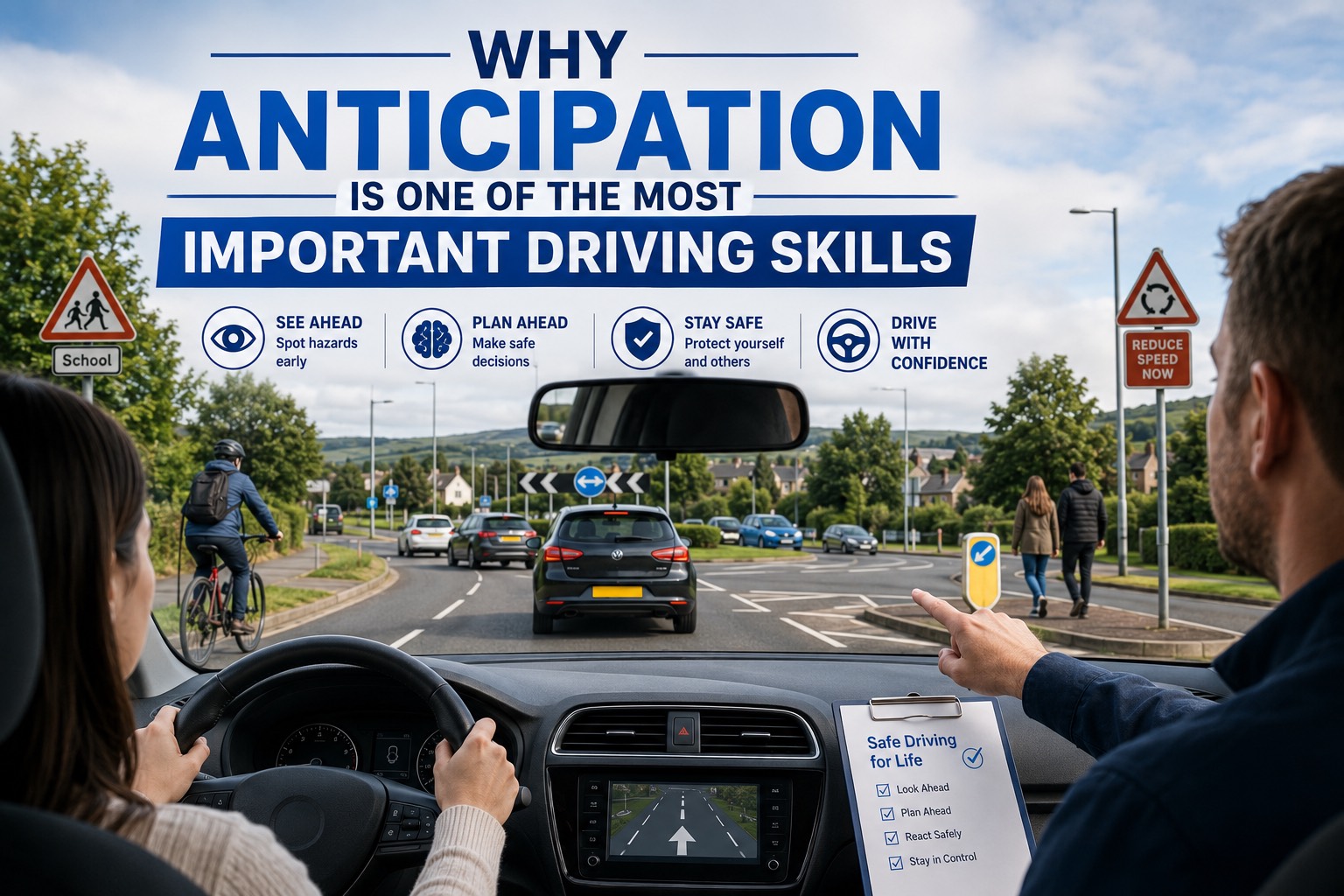
Discover why anticipation is one of the most important driving skills. Learn how STUART’S Driving School helps learner drivers recognise hazards early, make safer decisions, and build confidence across Central Scotland.
Why Anticipation Is One of the Most Important Driving Skills
Learning to drive is about much more than controlling the steering wheel, changing gears, or passing the practical driving test. One of the most valuable skills every learner driver can develop is anticipation. It allows you to recognise potential hazards before they become dangerous, make informed decisions, and react calmly in changing road conditions.
At STUART’S Driving School, anticipation is introduced from the very first lesson as part of our structured DVSA-approved coaching approach. Our experienced instructors help learners develop safe driving habits that prepare them for independent driving across Edinburgh, Livingston, Falkirk, Stirling, Fife, West Lothian, and throughout Central Scotland.
What Does Anticipation Mean in Driving?
Anticipation means recognising what could happen next and preparing to respond safely before a situation develops. Rather than reacting at the last moment, drivers who anticipate effectively are already planning their next move.
Good anticipation combines observation, hazard awareness, and forward planning. It allows drivers to identify potential risks early and adjust their speed, road position, or direction safely.
Examples of situations where anticipation is essential include:
- A pedestrian waiting near a zebra crossing.
- A cyclist moving around a parked vehicle.
- A vehicle slowing unexpectedly ahead.
- Children playing close to the roadside.
- Traffic building at a busy roundabout.
- Poor weather reducing visibility.
Why the DVSA Places So Much Importance on Anticipation
The Driver and Vehicle Standards Agency (DVSA) expects learner drivers to demonstrate anticipation throughout the practical driving test. Examiners assess whether learners can identify developing hazards, plan ahead, and make safe decisions without relying on last-second reactions.
Strong anticipation shows that you understand the road environment and can drive safely and responsibly in real-life situations.
How Anticipation Helps You Become a Safer Driver
Drivers who anticipate well are usually calmer, more confident, and better prepared for unexpected situations. Instead of making sudden decisions, they have time to react safely and smoothly.
Developing anticipation helps you:
- Recognise hazards earlier.
- Improve observation skills.
- Make safer driving decisions.
- Maintain better road positioning.
- Reduce sudden braking and steering.
- Drive more confidently in busy traffic.
These skills not only improve your chances of passing the practical driving test but also prepare you for everyday driving after gaining your licence.
Everyday Situations Where Anticipation Matters
Approaching Junctions
Before reaching a junction, good drivers reduce speed, check mirrors, observe traffic, and prepare for vehicles that may not stop or give way.
Driving Through Roundabouts
Anticipating the movements of other drivers allows you to choose the correct lane, adjust your speed, and enter the roundabout safely.
Following Other Vehicles
Watching traffic several vehicles ahead helps you notice braking or congestion earlier, giving you more time to respond smoothly.
Driving in Residential Areas
Parked vehicles, pedestrians, cyclists, and children can appear unexpectedly. Anticipation helps you prepare before hazards develop.
A Practical Example
Imagine you’re driving along a residential road where a football rolls onto the street from between parked cars.
A driver who reacts only when they see a child running after the ball may need to brake suddenly. A driver who anticipates the possibility of someone following the ball will already have reduced speed and be prepared to stop safely.
This type of forward thinking is exactly what DVSA examiners look for during the practical driving test.
Common Mistakes Learner Drivers Make
Developing anticipation takes practice, and many learners experience similar challenges during their lessons.
- Focusing only on the vehicle directly ahead.
- Looking too close to the front of the car.
- Missing early warning signs.
- Braking late instead of planning ahead.
- Failing to predict other road users’ actions.
- Reacting rather than anticipating.
With structured guidance from a qualified instructor, these habits gradually improve through regular practice.
How STUART’S Driving School Develops Anticipation Skills
At STUART’S Driving School, learners develop anticipation through carefully planned driving lessons in a wide variety of real traffic situations.
Our DVSA-approved instructors encourage learners to:
- Look further ahead.
- Scan mirrors regularly.
- Read road signs earlier.
- Recognise developing hazards.
- Maintain safe following distances.
- Plan ahead before junctions and roundabouts.
- Make calm, informed driving decisions.
This coaching approach helps learners become independent drivers who can make safe decisions without relying on constant instruction.
Building Confidence Through Experience
Anticipation becomes stronger with experience. During lessons, learners drive on a variety of roads across Central Scotland, including city streets, residential roads, rural routes, dual carriageways, and busy roundabouts.
Experiencing different traffic conditions helps learners develop the confidence to recognise risks early and respond safely in unfamiliar situations.
Why Anticipation Matters Beyond the Driving Test
Passing your practical driving test is only the beginning of your driving journey. Every day on the road presents new situations that require careful judgement and quick thinking.
Strong anticipation skills help you:
- Stay alert in unfamiliar areas.
- Drive safely in changing weather conditions.
- Protect yourself and other road users.
- Reduce the likelihood of collisions.
- Make confident decisions independently.
- Continue improving throughout your driving life.
These lifelong skills make every journey safer and more enjoyable.
Start Learning with STUART’S Driving School
At STUART’S Driving School, we believe safe driving begins with awareness, planning, and anticipation. Our experienced DVSA-approved instructors provide structured lessons that help learners develop confidence, sound judgement, and safe driving habits from the very first lesson.
Whether you’re learning to drive for the first time or preparing for your practical driving test, we’ll help you become a safe, responsible, and independent driver across Edinburgh, Livingston, Falkirk, Stirling, Fife, West Lothian, and throughout Central Scotland.